How to Microdose THC: Dosage, Effects & a Beginner's Guide
A practical, no-pressure guide to using small doses of THC to feel a little more present, a little more yourself.
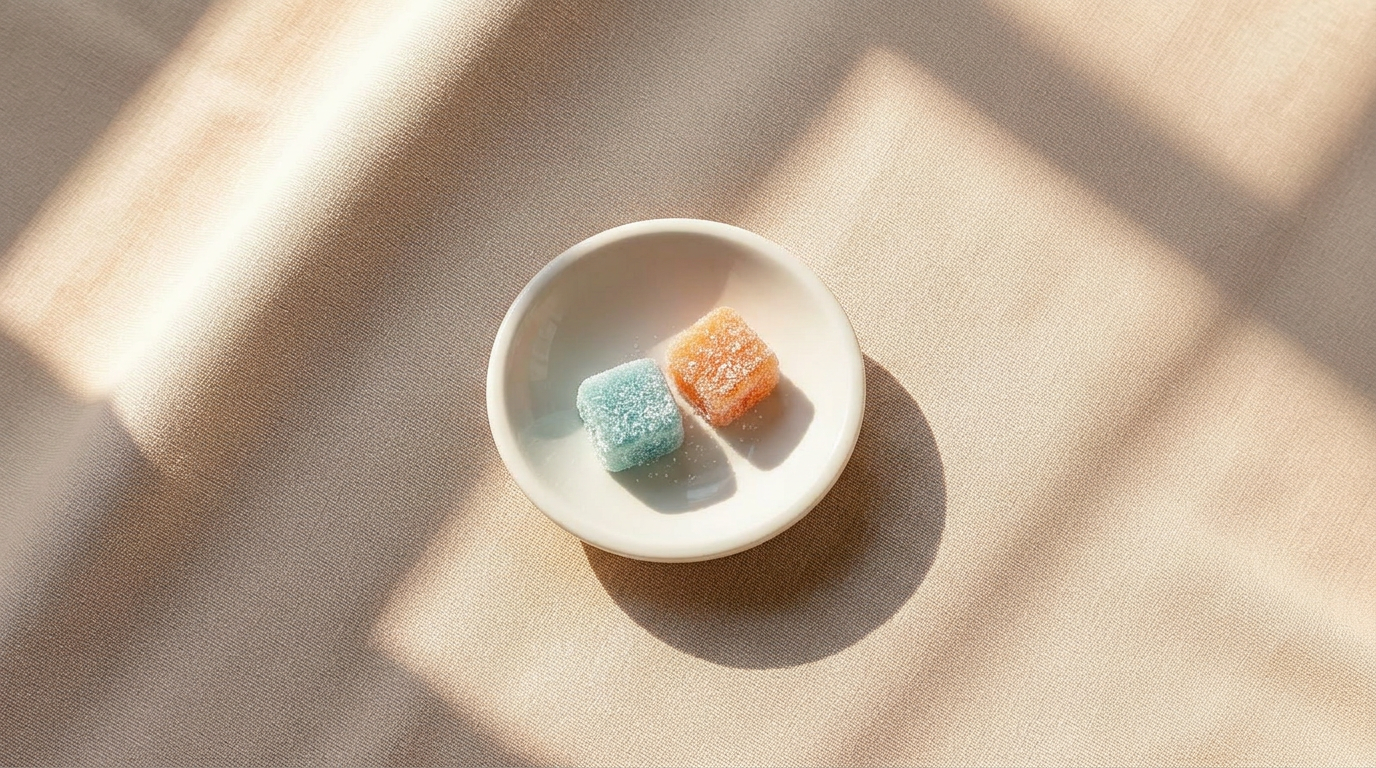
A microdose of THC is generally 1–2.5 mg. For context: a single typical gummy from a dispensary is often 10 mg, and a heavy edible can be 50 mg or more. A microdose is a fraction of that. It is small enough that most people feel grounded, clear, and a little lighter, rather than altered. However, it is worth nothing that tolerance, body chemistry, what you've eaten, and how you're feeling that day all matter. The number is a starting point, not a prescription.
If you're new to THC, or you've stepped away for a while and want to come back gently, microdosing is the best way to ease back into it. This guide walks through what a microdose actually is, how to start, what to expect in the first 90 minutes, and how to build the practice into something you can keep.
Why microdose instead of taking a full dose?
- You can stay functional. Work, parent, run errands, take a walk.
- It's harder to overshoot. The classic 'I took too much' edible story rarely happens at 2.5 mg.
- It builds awareness. Small doses make you a better observer of your own body and mind.
- It's sustainable. A microdose ritual is something you can hold for years, not weeks.
Microdosing is a small practice
1. Pick a low, predictable format.
Tinctures and low-dose gummies are the easiest entry points. They're measurable, repeatable, and don't require any tools. Use flower or vapes if you feel comfortable with the brand and strain.
2. Set the context, not the schedule.
Choose a window where you don't have to be anywhere urgent for the next two hours. No need to clear your calendar, just give yourself some breathing room.
3. Take 2.5 mg and wait.
Edibles take 30–90 minutes. Tinctures, taken under the tongue, are closer to 15–45 minutes. Do not redose. This is the part where most people get into trouble: they don't feel anything at 45 minutes, take more, and then peak two hours later harder than they wanted to.
4. Notice what shifts.
A microdose is subtle. You're looking for the small things. The music sounds a little fuller. The walk feels less rushed. The conversation goes one layer deeper.
What a good microdose feels like
"It's not louder, it's clearer. The day doesn't go away — you just stop arguing with it."
Most people describe a successful microdose as: slightly more present, slightly more curious, slightly slower in a good way. Body softens. Breath drops. You're still you, just taking life at a more comfortable pace. Think of it as the Friday right when you get out of work with a lazy four day weekend ahead of you. The next work day is far from your mind and you can do whatever you'd like with the weekend ahead.
Building it into a practice
A microdose works best when it's tied to something you were already going to do; not as a substitute, but as an accompaniment.
- Pair it with a morning walk, a yoga session, or a journaling block.
- Use it as a soft transition between work and evening.
- Try it before a creative session — writing, music, cooking, anything analog.
- Take occasional breaks. A few days off keeps the practice honest and the dose effective.
A note on safety
THC affects everyone differently. If you're pregnant, nursing, on medication that interacts with cannabinoids, or have a history of anxiety or psychosis, talk to a doctor first. Don't drive. Keep products out of reach of kids and pets. And if a dose ever feels like too much: hydrate, eat something, find a quiet room, and remember that it passes.
Microdosing is a small practice
THCA delivery in Atlanta, same day
Part of a good session is how you get your weed. LOFI VIBEZ offers THCA delivery across Atlanta and the surrounding metro, within 20 miles of the city. Order lab-tested THCa flower, pre-rolls, edibles, and vapes online and get same day weed delivery in Atlanta, discreet and straight to your door. Every product comes with a Certificate of Analysis. Must be 21+ with a valid government-issued ID.
READ NEXT