
Learn · Concentrates 101
Live Resin vs Live Rosin.
Same fresh-frozen flower. Two completely different ways to capture it. One uses a solvent. One uses only ice, heat, and pressure. Here's what that means for potency, safety, flavor, and how much to actually take.
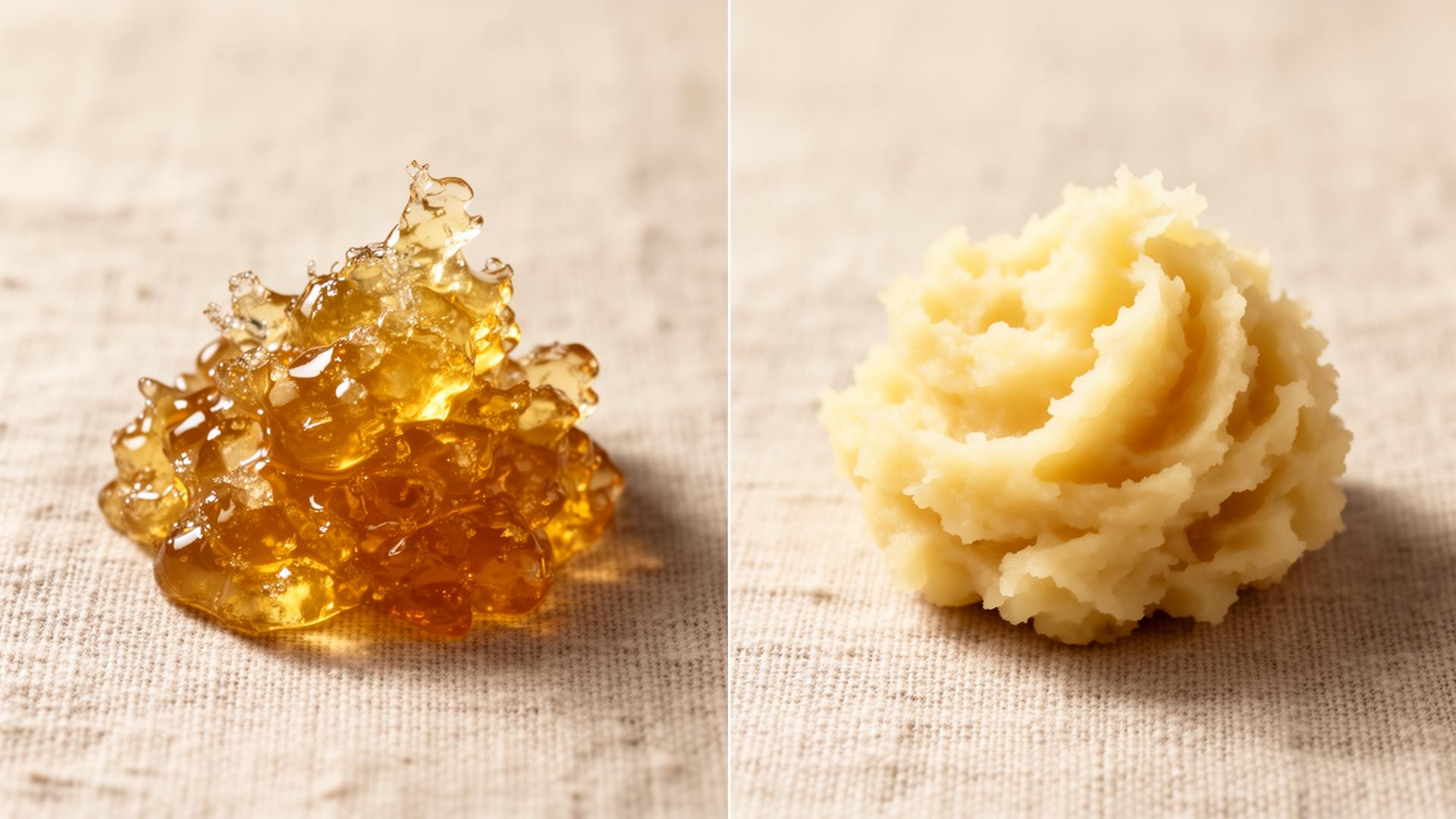
The 30-second answer
If you only read one paragraph.
Live resin uses a chemical solvent (butane or propane) to strip cannabinoids and terpenes from fresh-frozen flower. It's cheaper, more potent on paper, and widely available. Live rosin uses only ice water, heat, and pressure; no solvent ever touches the plant. It's cleaner, more flavorful, more expensive, and considered the top tier of cannabis concentrates. Both start with the same freshly-harvested, immediately-frozen flower. The difference is entirely in the extraction.
01 — The Process
How each one is actually made.
Live Resin
Solvent-basedStep 1
Fresh-frozen flower
Harvested and flash-frozen within hours; never dried or cured.
Step 2
Hydrocarbon wash
Liquid butane or propane is run through the plant material, dissolving cannabinoids and terpenes.
Step 3
Purge
Solvent is evaporated off under heat and vacuum. Residuals must be below state-mandated ppm limits.
Step 4
Live resin
Sauce, badder, diamonds, or sugar, depending on temperature and agitation during the purge.
Live Rosin
SolventlessStep 1
Fresh-frozen flower
Same starting point; flash-frozen at peak ripeness to lock in terpenes.
Step 2
Ice water hash
Agitated in ice water to knock trichome heads off the plant, then sieved through micron bags.
Step 3
Freeze-dry
The wet hash is freeze-dried into dry-sift kief. No heat that could degrade terpenes.
Step 4
Press
Hash is pressed between heated plates at low temperature and high pressure. What flows out is live rosin.
02 — Head to Head
The full comparison.
03 — What Matters Most
The four things people actually ask about.
Potency
Resin wins on paper. Rosin wins on feel.
Live resin typically tests 5–10 percentage points higher in THC, but raw cannabinoid percentage isn't the whole story. Live rosin retains a wider spectrum of minor cannabinoids and terpenes, which often produces a fuller, more layered high at a lower THC number. This is the entourage effect in action.
Safety
Both are safe when lab-tested. Rosin removes the variable.
Reputable live resin is purged to well below legal residual-solvent limits and verified by a Certificate of Analysis. Live rosin is solventless by definition — there is nothing to purge, nothing to test for, nothing to worry about. If you're solvent-sensitive or simply prefer the cleanest extract possible, rosin is the answer.
Quality & flavor
Rosin tastes like the plant. Resin tastes like the extract.
Because rosin is mechanically separated and pressed at low temperatures, it preserves the strain's full terpene fingerprint — you taste the lineage. Solvent extraction can strip or alter the most volatile terpenes, producing a louder but flatter flavor. Cold-cure live rosin is widely considered the highest-flavor concentrate on earth.
Consistency
Resin is engineered. Rosin is harvested.
Live resin can be manipulated into shatter, sauce, sugar, badder, or diamonds by adjusting temperature, agitation, and time. Live rosin is more limited, typically fresh-press badder or cold-cured jam because the natural plant material dictates the texture rather than the process.
04 — How to Dose
What this means for your dose.
Concentrates are an entirely different category from flower or edibles. A single dab can deliver 10–20× the THC of a hit from a joint. Treat them with the respect they deserve.
Microdose
Half a rice grain
~5–10 mg
First timers, daytime, microdosers, anyone testing a new strain.
Standard dab
One rice grain
~15–25 mg
Most experienced concentrate users. One hit, then wait 5–10 minutes.
Heavy dab
Half a pea
~30–50 mg+
Seasoned daily dabbers with a high tolerance. Not a starting point.
Resin vs Rosin: the practical dosage difference
- Same size dab, different feel. A rice-grain of live resin at 85% THC delivers ~21 mg of THC. The same size of live rosin at 75% THC delivers ~18 mg — fewer milligrams, often a more pronounced experience because of the intact terpene and minor-cannabinoid profile.
- Start smaller with rosin. Because the high is fuller and the terpenes hit harder, experienced resin users routinely cut their dose by 25–30% when moving to live rosin.
- Onset is fast. Both hit within 30 seconds and peak within 5–10 minutes — unlike edibles. Wait a full ten minutes before deciding whether to redose.
- Temperature matters. Low-temp dabs (480–520°F) preserve terpenes and produce a smoother, more flavorful, less overwhelming high — especially important with rosin.
Concentrates are not beginner-friendly. If you've never used cannabis before, start with a 2.5–5 mg edible or a low-THC beverage. Build a baseline first.
05 — Choosing
So which one should you buy?
Choose Live Resin if…
- You dab daily and value affordability
- You want maximum THC per dollar
- You like a wide range of textures (sauce, diamonds, badder)
- You're filling a vape cart
- You trust your brand's COA and lab testing
Choose Live Rosin if…
- You want the cleanest, solventless extract possible
- Flavor and terpene preservation matter most
- You're sensitive to residual solvents or simply prefer to avoid them
- You want the fullest spectrum the plant can offer
- You're treating cannabis as a craft, not just a delivery system
FAQ
Common questions.
Is live rosin stronger than live resin?+
On a raw THC basis, live resin usually tests slightly higher (70–90% vs 65–85%). On felt experience, live rosin's preserved terpene and minor-cannabinoid profile often produces a stronger, more nuanced high at a lower THC percentage.
Is live resin bad for you?+
Properly produced, lab-tested live resin is safe and widely consumed. The concern is poorly purged or untested extract that may contain residual hydrocarbons. Always check the COA.
Why is live rosin so expensive?+
Yields are tiny (2–4% vs 15–20% for solvent extraction), it demands premium fresh-frozen starting material, and the process is labor-intensive. You're paying for the labor and the loss.
Can you eat live resin or live rosin?+
Both must be decarboxylated and infused before they're edible. Many premium gummies and infused pre-rolls are now made with live rosin specifically for the flavor and entourage effect.
What's the difference between rosin and live rosin?+
Regular rosin is pressed from cured, dried flower or kief. Live rosin starts with fresh-frozen flower processed into ice water hash first — preserving terpenes that are lost during curing.
What's the difference between live resin and distillate?+
Distillate is a highly refined cannabinoid oil (typically 80–95% THC) made by stripping away terpenes and most minor cannabinoids through heat and vacuum distillation. Botanical or cannabis-derived terpenes are usually reintroduced afterward for flavor. Live resin skips that refinement entirely and preserves the plant's full, naturally-occurring terpene and cannabinoid profile from the moment of extraction.
Keep going.
The more you know about what's in the jar, the better the ritual.
Put It Into Practice
Shop the catalogue
Lab-tested, hemp-derived, delivered same day across metro Atlanta.